

By Jade Greene
As we all celebrate the 250th anniversary of the signing of the Declaration of Independence, let’s look back together at what farming was like right here in Bucks County at that time.

Thompson-Neely Barn, built in the 1700’s.
When the first colonists from Europe arrived in the Bucks County area in 1609, they arrived on Lenni Lenape land. The “original people” were already cultivating the land in a sustainable manner for corn, squash, and fruits (read more about the Three Sisters here). William Penn and subsequent groups of settlers acquired land through purchases and treaties with the Lenape people, while colonization increasingly displaced Indigenous communities from their ancestral lands. This marked the beginning of a profound transformation of the region’s landscape and culture.
The first European farmers were privileged with the great farming conditions of Bucks County; they found the climate to be very favorable to farming as it is “wetter and warmer than the rest of Pennsylvania, with a fairly long growing season.” The soils were also excellent for farming. Additionally, with Bucks’ close proximity to Philadelphia’s ports, farmers could export their farm products to foreign markets. Bucks County was an ideal location to set up a farmstead.
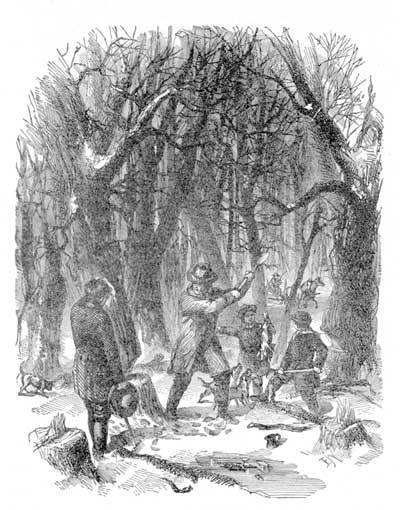
Felling trees in the wood lot.
In the 1700s, many farmers practiced what historians call “extensive agriculture.” Rather than continually improving the same fields with fertilizers or regenerative farming techniques like today, farmers often cleared new sections of forest as soil fertility declined, moving cultivation across different parts of their property.
Contrary to the popular image of self-sufficient colonial farms, many Bucks County farmers were deeply connected to local and international markets. While farm families produced some of what they consumed, they also relied on trade and produced specialized crops that could be sold through Philadelphia and beyond. Bucks farms were diversified and grew a combination of:
- Grains including wheat, rye, barley, oats, buckwheat,
- Vegetables including corn, potatoes, turnips, cabbage
- Fruits including apples, peaches, cherries
- Fiber plants like hemp and flax
- Livestock including cattle, sheep, swine, horses, poultry, and bees
- Hay for livestock feed
- Wild crafting including foraging for nuts and berries, fishing, hunting game, lumber, maple syrup

View of Almshouse. Oil on canvas, 30 x 24 inches, c.1900. James A. Michener Art Museum. Doylestown, PA.
Crops that were not sold to international markets were sold locally. Many farmers sold goods directly at mills and ironworks, and other commercial centers where people regularly gathered. While public markets existed in larger towns such as Philadelphia at the time, in Bucks County local trade often occurred at these community hubs, rather than a town center market or store.
Farming was very labor intensive in the 1700s. Many agricultural convenience tools had yet to be invented and required manual labor. Farm work was not just tending to crops or livestock, farmers devoted enormous amounts of time and labor to:
- Clearing: Cutting down the massive trees that thrived at this time was a huge job. Trees needed to be cut, stumps removed, and logs turned into usable products such as lumber or potash (a water soluble potassium carbonate produced by burning wood to create ash). There were no chain saws or mechanical aids to assist.
- Fencing: Fences were constructed to meet legal requirements defining property rather than for preventing wildlife encroachment. Most fencing at the time was split wood rails stacked in a zigzag, all done by hand.

Split Rail (zigzag) fencing
- Making meadows: Farmers at the time made their own meadows by diverting streams with ditches and dams into low laying areas, thereby helping irrigate grasses for hay and other crops.
Women performed a substantial share of farm labor, including fieldwork such as planting, raking, and harvesting. They also managed essential household production including dairying, food preservation, spinning, weaving, sewing, cooking, and caring for livestock.
Keep following our farming history blog series! Next time, we’ll explore farming innovations that originated in Bucks County and how they changed agriculture across America.
Sources:


0 Comments